

THE SCIENCE
How Reverse Osmosis Works
Reverse osmosis forces water through a semi-permeable membrane with pores so small that only water molecules can pass through. Contaminants — including dissolved solids, heavy metals, bacteria, viruses, and chemical compounds — are rejected by the membrane and flushed away. The result is water that has been purified at the molecular level.
This is why RO is widely considered the most effective point-of-use water filtration technology available for residential homes. While carbon filters excel at removing chlorine, taste, and odor, RO goes further — reducing contaminants like arsenic, lead, radium, fluoride, nitrates, and PFAS that carbon filters simply cannot address. For homeowners concerned about what’s in their drinking water, an RO system under the kitchen sink provides the highest level of protection available.
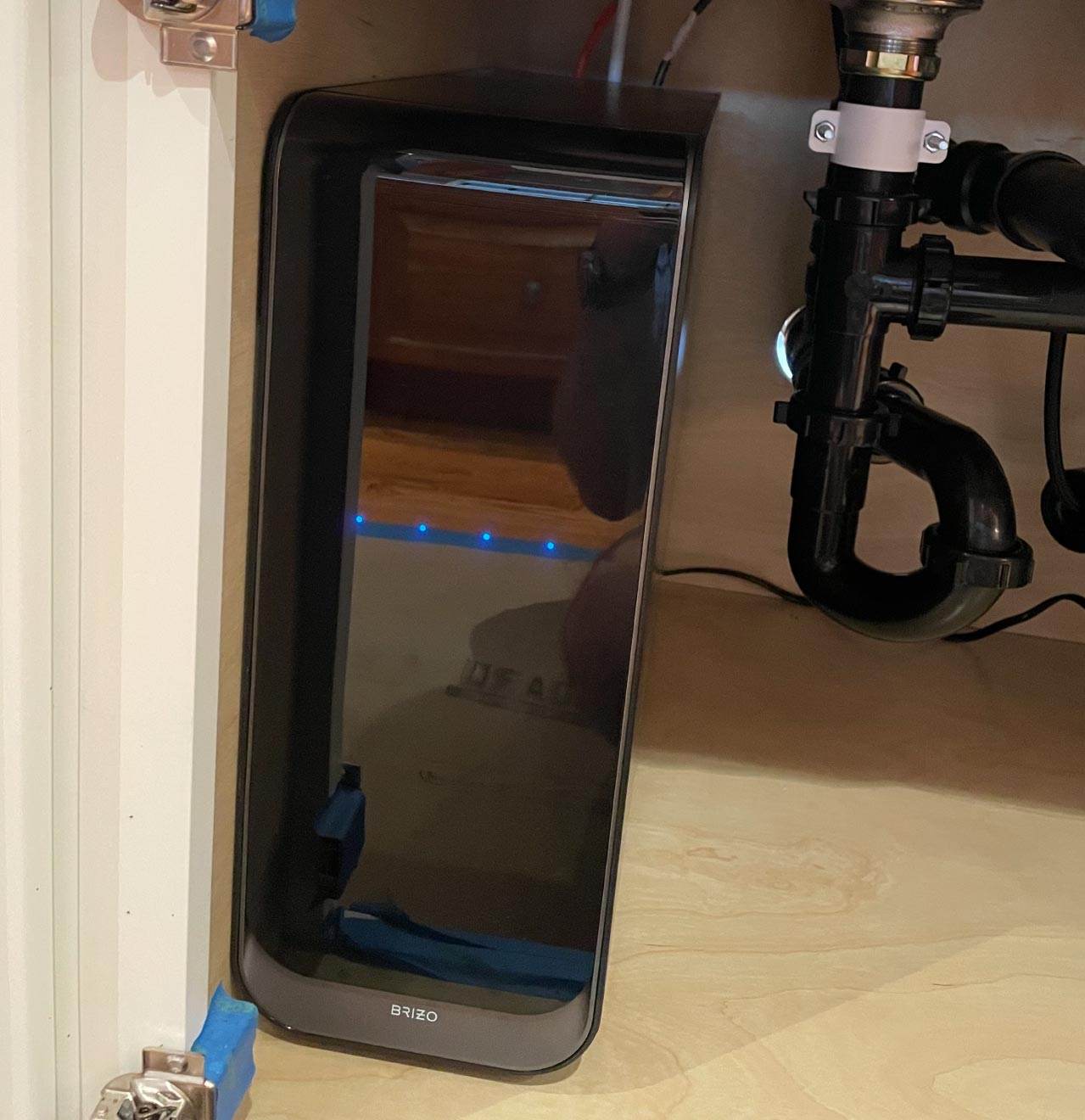
Modern tankless RO systems improve on this technology by purifying water on demand rather than storing it in a pressurized tank. This means fresher water, less waste, and — critically — no risk of tank failure and flooding.
FILTRATION POWER
What Reverse Osmosis Removes
RO systems are effective at reducing or eliminating a wide range of contaminants that other filtration methods leave behind.
WHY TANKLESS
Tankless RO vs. Traditional Tank Systems
Traditional RO systems store purified water in a pressurized bladder tank under your sink. These tanks were one of the most common sources of under-sink flooding in American homes. Tankless models eliminate that risk entirely.
FLOOD RISK – TANK BASED RO
Tank Based RO – Hidden Flood Risk Under Your Sink
For decades, tank-based RO systems were the standard installation under kitchen sinks across America. These systems store purified water in a pressurized bladder tank — and when those tanks fail, the results can be catastrophic. Bladder ruptures, fitting failures, and slow leaks from aging tanks have made under-sink RO systems one of the most common sources of residential water damage.
The damage from a failed RO tank can be extensive: warped cabinetry, ruined flooring, mold growth behind walls, and insurance claims that can run into thousands of dollars. And because the tank sits inside a closed cabinet, leaks often go undetected for hours or even days — allowing water to spread through subflooring and into rooms well beyond the kitchen.
Tankless RO systems eliminate this risk completely. With no storage tank, there is no bladder to rupture, no pressurized water sitting in your cabinet waiting to leak, and no stagnant water that can harbor bacteria. Water is purified the moment you turn on the faucet and stops the moment you turn it off.